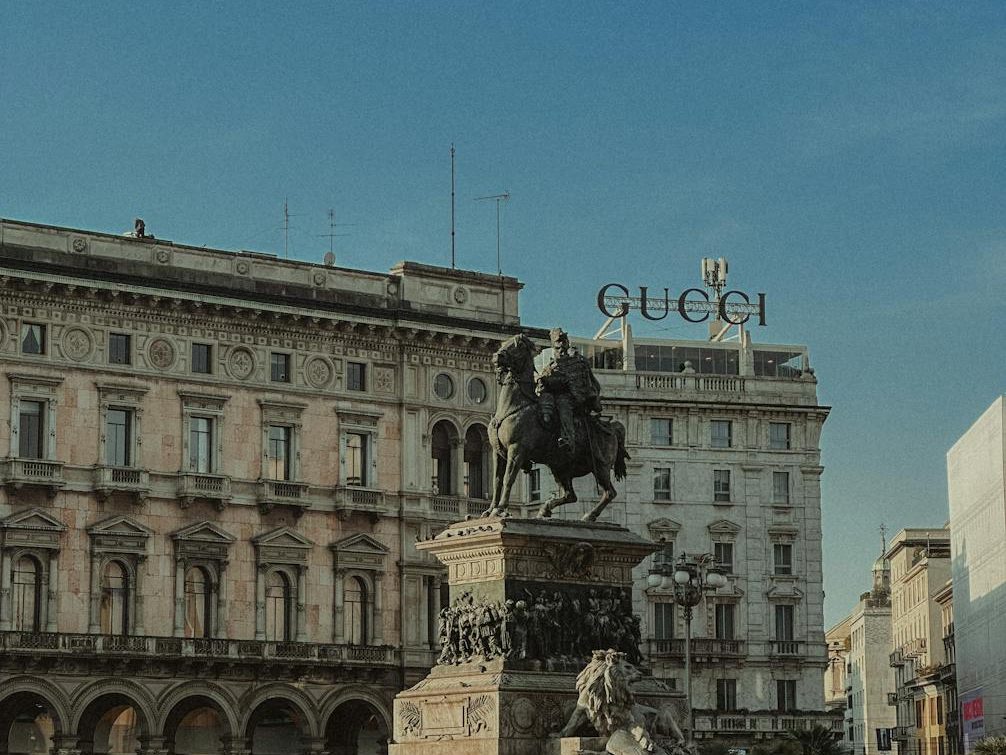
Few things fascinate society more than inherited wealth.
Not because of the money itself, but because of the assumption that wealth arrives hand in hand with happiness, security, and permanence. We are sold a vision of dynasties standing untouched by the anxieties of ordinary life. Grand homes. Private jets. Names that open doors before introductions are even made.
And yet, history repeatedly suggests otherwise.
The story of Gucci is perhaps one of the most elegant examples.
Founded in Florence in 1921 by Guccio Gucci, the house began as a symbol of craftsmanship and aspiration. The luggage, leather goods, and equestrian influences that would later become synonymous with the brand emerged from a simple understanding of luxury: quality creates desire, and desire creates loyalty.
It should have been a straightforward story of success.
Instead, it became a study in power.
As generations inherited not only wealth but influence, disagreements that might have remained private in another family became matters of public fascination. Alliances shifted. Rivalries intensified. Courtrooms replaced boardrooms. Family members became adversaries. The brand grew stronger even as the family itself appeared to fracture.
There is something almost Shakespearean about luxury dynasties.
The greater the fortune, the greater the expectation that it must be protected. Yet the act of protection often becomes the very thing that threatens it. Control breeds conflict. Legacy breeds entitlement. Names become assets, and assets become battlegrounds.
The irony of Gucci is that the house survived.
The family, in many respects, did not.
Today, Gucci exists as one of the world’s most recognizable luxury brands, its products displayed in immaculate boutiques from Milan to Tokyo. Millions purchase a piece of the dream every year. Most know the logo. Far fewer know the story.
Perhaps that is the final lesson.
Luxury brands often outlive the people who create them.
Buildings remain. Monograms endure. Campaigns are archived. Perfumes continue to be sprayed onto wrists long after the names behind them have faded from public memory.
Legacy, it seems, is rarely inherited as neatly as a leather handbag.
It is negotiated. Contested. Reinvented.
The House of Gucci reminds us that wealth can purchase influence, but it cannot purchase harmony. It can secure a place in history, but not necessarily a peaceful place within a family.
And perhaps that is why the story continues to captivate us.
It is not a story about fashion.
It is a story about people.
The handbags merely happened to be exceptional.
The record remains.

